Citizenship

If you work remotely and wish to settle in Europe, will rich culture, affordable living, and fantastic scenery attract you? Obtaining the Romania Digital Nomad visa could be the way for you to discover something new.

Strong Citizenship Application

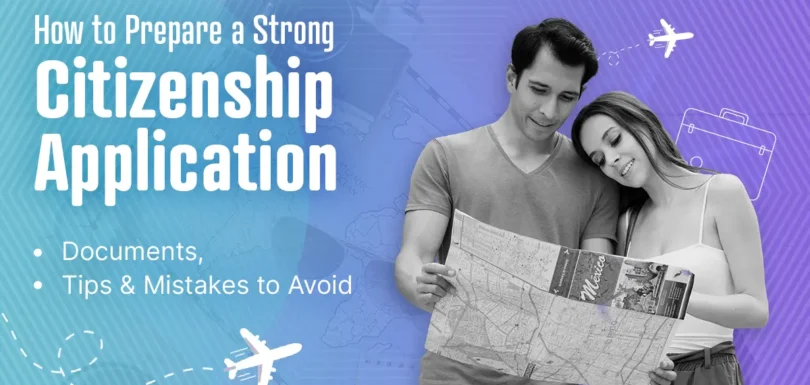
How to Prepare a Strong Citizenship Application: Documents, Tips & Mistakes to Avoid

How to a Strong Citizenship Application: Documents, Tips & Mistakes The decision to become a citizen is a major turning point in life that assures continuity, privileges, and new possibilities. Essentially, a citizenship application is the heart of this process, where handling with the utmost accuracy and gentleness is a must. A lot of applicants get retarded due to the denial of their citizenship applications, and this is usually caused by common citizenship application mistakes. With the right preparation, you can not only sidestep these hazards but also strengthen your file for the green light. Understanding the Citizenship Application Process Knowing the steps of the citizenship application process is a prerequisite for figuring out how to apply for citizenship. The requirements differ from one country to another, but the majority of them still have similar steps to the citizenship: Generally, citizenship by naturalization is the typical method; however, there are a few other ways, like birthright, descent, and investment. The EU citizenship process is more convenient for those residing in Europe as it enables them to move freely across the member countries without any restrictions. What Makes a Strong Citizenship Case? Many applicants frequently ask the best way to have a strong citizenship case. Indeed, each nation has its own set of requirements; however, there are certain things which are always crucial to get the officials’ approval: If you happen to be asking how to get citizenship fast, the smartest thing you could do is to blend these elements into your application. Citizenship Documents Checklist The complete and accurate listing of transaction-related documents, such as identity proofs, is essential in taking ownership of citizenship and in avoiding unnecessary delays. Though the requirements vary from one country to another, most of the authorities give nearly the same set of documents to be submitted for the acquisition of citizenship: Valid Passport & National IDs. Birth or Marriage Certificates. Proof of Residence. Tax Returns & Financial Records. Language or Civic Test Certificates. Preparation with your papers ahead of time will make the process of applying for citizenship smoother and less likely to be denied due to uncompleted documents. Naturalization Application Tips One feels totally overwhelmed when they decide to apply for citizenship by naturalization, but just implementing the right strategy makes the entire procedure a lot easier. Some of the most important naturalization application tips are the following: Stay Organized. Get Ready for the Interview. Check your forms twice. Pay attention to deadlines. If you need it, get help from a pro. Being thorough and prepared will make you a strong client, and you will encounter fewer barriers when you go through the citizenship application process. Common Mistakes That Lead to Rejection Even the most powerful figures cannot avoid the risk of a fall due to their incorrect citizenship application, which is sometimes caused by the procedure itself. These are the most common mistakes made in the citizenship application and the major reasons for the rejection of the citizenship proposal: Incomplete Documents. Missed Deadlines. Failing Tests or Interviews. False or Inconsistent Information. The recognition of the mentioned hazards is only the initial step to being aware of the ways to avoid the rejection of your application. By thoroughly checking the documents, keeping the appointments, and being completely prepared, you can lessen the mistakes and raise your case success rate. How Long Does a Citizenship Application Take? How long a person will take to get citizenship is different for each country and can be anywhere from 6 to 24 months. The procedures for getting citizenship in either the EU or North America can be lengthy because of the waiting list or the number of applications. On the whole, the queues’ delays are primarily caused by the missing or incorrect documents, the security check, or even the waiting caused by the local administration. In case your citizenship application is complete and without any mistakes, the process will be faster. Tips to Avoid Citizenship Application Denied Status Every applicant would wish that their citizenship application not be denied. To lower the chances of failure, you should adopt the following measures: Double-check your forms. Keep the process in order. State of your documents: Employ a citizenship documents checklist. Work out the details thoroughly. Get the support of a professional if you feel like you need it. You will not only know the way to avoid rejection but also be able to facilitate your approval by being diligent and cautious.   Citizenship Interview Preparation An interview with the officials is one of the fundamental stages in the citizenship application process. Seeing the event as a way to relax your nerves and get better results is a positive approach. What to Expect The officials will ask questions about your background, the place where you live, and the work you do. Language and civic knowledge tests will be conducted if necessary. A watch over the documents you have given for citizenship will be held. Tips for Success Study the civic materials. Work on your language skills. Try to remember your application. Keep yourself cool and always tell the truth. A well-prepared citizenship interview not only increases your self-confidence but also makes your process of naturalization a step further. Conclusion Comprehensive planning, the completion of correct and accurate paperwork, and the avoidance of delay or rejection due to minor mistakes are the main factors in winning a citizenship application. Those who step into the shoes of successful applicants through the right citizenship process, sorting out the necessary citizenship documents, and acquainting themselves with interview questions, will definitely be very successful. Always keep the end goal in mind and check every little detail, and if you are still not quite sure, do not hesitate to ask for help. By showing enough determination and patience, you will be able to get hold of a naturalized citizenship, thus making a very important step towards a life of your dreams and a safer future. Recent Blogs How a Second Passport Can Protect You During Political Instability or Crisis

Continue Reading
Second Passport can Protect You

How a Second Passport Can Protect You During Political Instability or Crisis
How a Second Passport can Protect You during Political Instability Factors such as wars, economic collapses, and international sanctions, which have been altering global stability, are the reasons why second passport benefits are becoming increasingly important. A second passport is not only for easy travel, but also a safety system in times of need. By way of investment-based citizenship for security, people can get a security backup plan for immigration, which will keep them free, safe, and with their loved ones, if their first travel document is no longer capable of doing so. What is a Second Passport and Why Does it Matter? A second international passport provides you with legal citizenship in another country, thus giving you the rights of residence, safeguards, and long-term safety. Some of the main second passport benefits are a much wider travel scope and access to safer countries. By having a second passport for travel freedom, you get one of the most efficient global mobility solutions. While going through alternatives, it is wise to look at the safety rating of the passports, as quite a few factors determine how powerful a passport is, including the extent of travel facilities as well as the degree of protection in case of emergency. Second Passport Benefits during Political Instability A second passport is like a rescue that can be a great help in a difficult situation. It gives a legitimate way to get away from political upheaval, thus making an expat escape plan for families and individuals. In addition, it offers asset protection, a second citizenship that can protect money from sanctions or dispossession, and at the same time, be a source of a second passport and tax planning via residential and income diversification. How a Second Passport Acts as an Immigration Backup Plan A second passport is similar to a backup plan for migration, a safety net for unforeseeable times. The annals of history are replete with instances where people had to flee their countries due to wars, sanctions, or the collapse of the financial system. Those who are holding double nationality could relocate more easily, whereas the rest encountered closed frontiers and a scarcity of alternatives. In fact, having an expat escape plan set up before you are the one who is affected by the instability gives you a safe and legal way for you and your family to get out of the situation. Safest Countries for Second Citizenship in 2025 If you want to be assured of your future and travel anywhere as you please, then it would not be a bad idea to look into the most secure countries for getting a second passport. See the best picks for 2025: Portugal: One of the best countries to acquire a second citizenship is definitely Portugal since it permits having all the perks of the EU within the 26-country Schengen zone, and being part of a very steady and well-established democratic regime. Malta: As a safe citizenship-by-investment program, Malta is a very sought-after destination within the EU and the rest of the world, by issuing a highly trusted passport. Ireland: Not only politically stable but also well known as a second passport for political stability, the Emerald Isle will let you take advantage of being an EU member, and at the same time, gain a good international reputation. Dominica & St. Kitts: Globally stable, low-cost initiatives for enhanced mobility through the two longest-running Caribbean citizenship-by-investment programs. Citizenship by Investment Programs for Safety Through citizenship by investment for safety, applicants can make a supporting donation, purchase a property, or start a business to have a second nationality. Such an option is extremely beneficial for individuals who are setting up an immigration backup plan, as it provides one of the quickest and completely legal ways to obtain a protective passport. Fast & Reliable Options Caribbean programs (Dominica, St. Kitts & Nevis, Antigua, Grenada) are among the fastest global mobility solutions, i.e. usually 3-9 months, with costs starting from $100. Turkey’s real estate or capital investment has moderate timelines. Choosing the Best Country Base the comparisons on the factors of cost, duration, and passport ranking by safety. The Caribbean states are still the most budget-friendly and time-efficient option, whereas the EU choices (if any) provide more solid mobility but are more expensive and take longer. Financial & Asset Protection Advantages Besides that, a second citizenship becomes a powerful source of asset protection from banking restrictions as well as the imposition of sanctions. That allows diversification off the main bank and makes the use of a second passport and tax planning type more effective, which not only will make your wealth more secure but also reduce the risks associated with a particular country. How to Escape Political Unrest Legally In times of uncertainty, the most reliable way to maintain your liberty is by using modalities that are within the law, like second passports, golden visas, and residency permits. Such alternatives constitute the basic elements of a safe expat escape plan and immigration backup plan, which enable you to get away immediately if trouble comes. The main factor is time; it is always better to kick off your plans as early as possible. Therefore, if a crisis is experienced, you would still have options to choose from, as most borders will be closed. New challenges are emerging every day, so the benefits of a second passport would be much more than just getting around easily. They are security, liberty, and mobility, which are very important in times of disasters, as they can be used both as a means of defense and a source of income. Delving into the best countries to obtain a second citizenship is no longer merely a matter of personal preference but rather a move that secures your family, properties, and time to come in volatile periods. Recent Blogs Second Passport Benefits Residency vs Citizenship: What’s Right for You? Retire Abroad in 2025 Cheapest Countries Offering Residency Programs in 2025
Continue Reading
Second Passport Benefits

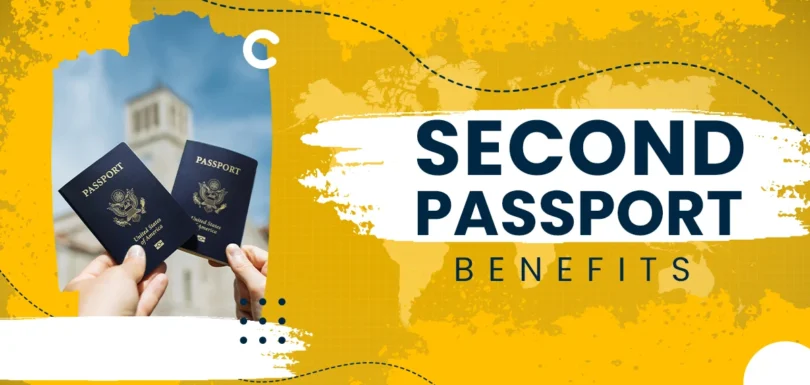
Second Passport Benefits

Over the course of the year 2025, the need for a second passport has been skyrocketing considerably. Unstable situations all over the world, harsher entry formalities, as well as the necessity for a trustworthy alternative citizenship account, are the main factors of the rising demand for a second passport. For a great number of workers and families, no more than privileged access to the world and a safe way to diversify assets is what the dual citizenship solution has become, a tool that opens the door to a new world of possibilities and offers them protection, freedom, and growth. What is a Second Passport? A Second Passport refers to a document of identification that will be given to you due to your dual nationality. It will make you a member of two different states at the same time. Unlike a permanent residence that only gives the right to live in a particular country and can be revoked, dual citizenship provides all the rights of life, such as travelling without a visa, voting, buying a property, and using healthcare and education. Accordingly, the benefits of a second passport become more valuable than a simple stay. Benefits of a Second Passport Second passport benefits are not just limited to easy access to travel: Freedom of Travel: Enjoy entry to more countries where you can go either without a visa or get one on arrival. Security & Plan B Citizenship: A saving option in a period of political or economic turmoil. Business & Lifestyle Opportunities: The worldwide markets, properties, and pleasant living situations are yours. Financial Perks: More tax planning and wealth accumulation become easier with dual citizenship. How to Get a Second Passport in 2025  On the whole, a second passport can be obtained by three major methods: By Descent: It is possible that you become a citizen of two different countries for no big cost if you have family connections in another country. By Naturalization: Acquired after being in a foreign country for several years and fulfilling the residency requirements. By Investment: The quickest method of acquiring a second passport, via real estate, bonds, or donations, particularly in second passport Caribbean and a few EU countries. Getting dual citizenship with streamlined second passport programs in 2025 has really opened up the easiest way to achieve dual citizenship. Second Passport Programs in 2025  In 2025, second passport programs are the most popular in Europe and the Caribbean, each with specific advantages. EU Second Passport: Rhetorical examples of the countries Portugal, Malta, and Greece, all of which provide extremely attractive EU second passport solutions to get easy access not only to the Schengen Zone but also to the medical service and education sector of the respective countries. And most of them ask for quite big investments or lengthy residencies. Second Passport Caribbean: The projects of St. Kitts, Nevis, Dominica, and Grenada are quite quick and more affordable than others. Usually, a second passport in the Caribbean means very limited restrictions on travelling to any part of the world, with the entire procedure being accomplished within a few months. EU choices are expensive but offer full rights, whereas Caribbean programs are less expensive and faster to accomplish. Why Consider Dual Citizenship?  Dual citizenship is not just about the liberty to move around, but it is also a security system. A second passport is becoming a necessity these days due to political changes and the increasing need for mobility; it provides families with safety, entry to quality health services and education, as well as living options that are more adaptable. Tax planning with dual citizenship is a money-wise procedure that will help you multiply your money and cut down on the risk of losing it. That is why it is a brilliant plan B citizenship for 2025. Fastest and Easiest Options for a Second Passport The Caribbean is the best option and the fastest way to get a second passport. Some of the countries, like St. Kitts & Nevis, Dominica, and Grenada, are able to complete the whole process only in a few months, and thus, they become the first choice of investors looking for fast mobility. While the European paths, such as Portugal, Malta, or Greece, still give you a pretty good EU second passport, they are accompanied by a longer residency or a higher investment. Is a Second Passport Right for You? A second passport is not merely for the rich; it is really the best option for digital nomads, entrepreneurs, retirees, and frequent travellers who wish to have the convenience and security. Among the benefits of a second passport are worldwide travel without restrictions, financial assistance and diversification, and a haven in times of crisis. On the other hand, it is necessary to consider the pros and cons. Certain programs entail large investments, while some are quite accessible through descent or naturalization. Figuring out the best way to get a second passport, relying on ancestry, residency or investment, will guide you to make that decision if it fits your way of life and plans. Conclusion In 2025, a second passport will be more valuable than ever. The benefits of a second passport are not only limited to the ease of travelling and financial diversification, but also cover security, opportunity, and peace of mind. For example, dual citizenship is the most powerful tool that gives the greatest advantage in terms of flexibility, not only to families but also to professionals in a rapidly changing world. Regardless of the means, such as descent, residency, or investment, the second passport programs 2025 investigation can be the proper way of selecting the most suitable plan for your objectives. Basically, during crises, the idea of having a second passport does not only represent a mere choice; however, it still stands as a clever strategy for the future. Recent Blogs How to Prepare a Strong Citizenship Application: Documents, Tips & Mistakes to Avoid How a Second Passport Can Protect You During Political Instability or Crisis Residency vs Citizenship: What’s Right for You? Retire Abroad in 2025

Continue Reading
Residency vs Citizenship

Residency vs Citizenship: What’s Right for You?

Residency vs Citizenship: What’s Right for You? Retiring abroad is trendier than ever before in 2025, and with such huge mobility all over the world, people are not only touring, but also quite frequently living in new countries. As a result, many people are comparing their plans between residency and citizenship. This comparison is really important since the two different rights, benefits, and commitments give very different things to the individual. Whereas permanent residence guarantees the legal right to live in the country, citizenship is more comprehensive as it confers a passport, political rights, and, in many cases, security of life. The decision between them is not simply a matter of choosing the same solution that fits all. Your decision will depend on what you wish to achieve in the long term, what kind of retirement you want, and the extent of legal rights that you want in your new home country. Residency Residency allows you to stay in a country legally without being a temporary or permanent resident. In such a case, the status may be temporary (1-5 years with renewal) or permanent (an unlimited stay with limited rights). Most typical means of obtaining a residence permit are usually those involving investment, employment, family reunification, digital nomad, and retirement visas. Residency is often the first step to moving overseas. Citizenship Citizenship gives a person the full legal rights in a particular country, for instance, the ability to vote, get a passport, and use all public facilities. Unlike residency, it is permanent. The key difference between permanent residency and a passport is that becoming a citizen will keep you out of danger and provide you with more countries to travel to. Naturalization after residency is the major route that people take to get citizenship. Residency vs Citizenship Both residency and citizenship allow a person to stay in a country, but the extent of rights and benefits differ significantly: Legal Rights & Political Participation: Residents can do non-political activities, such as living, working, and studying; however, only citizenship can give the right to vote and take part in the government. Visa-Free Travel: You can travel to more destinations in the world without a visa through citizenship, whereas residency only gives the right to live without a visa in the country of residence. Healthcare Access for Residents vs Citizens: Residents have the option of getting public health care at certain times and at a certain cost, but citizens usually get all the benefits they pay for. Financial & Tax Obligations: People who have been given residencies are almost always required to pay local taxes; however, some citizens, depending on the country, may also be liable to pay global taxes. Pros and Cons of Residency Pros: Obtaining a residency is simpler and quicker than taking citizenship. Affordable prices and less complicated eligibility criteria. A smaller number of commitments, which will give you the possibility of changing your mind and still maintain your freedom. Cons: Limited rights, such as no voting rights and the absence of a national passport. Necessity of renewal or proof of income. Permission to use certain services, like the healthcare system and welfare programs. Residency is perfect for people who are looking for a certain degree of flexibility. However, it is somewhat hostile for those who have already retired and like to have comprehensive rights. Pathway from Residency to Citizenship Going the route of residency leading to citizenship is often the easiest and most sensible way for most retirees. They first get their illegal stay sorted out, and then make use of their full rights through a naturalization process. The duration is quite flexible, usually from 5 to 10 years, and it largely depends on the individual country’s laws. This means that in such cases: Portugal: You can apply for citizenship after 5 years of living in the country. Spain: Usually, 10 years of residency is required. Malta: Quick ways through money or a long-term stay. Permanent Residency vs Passport: Which is Better?  Deciding between permanent residency and a passport, the choice is a matter of lifestyle, goals, and the extent of your commitment. Who Should Choose Residency? A digital nomad and a retiree who love the liberty to move around are the best candidates for residency. It is much simpler to get, less expensive, and grants you the opportunity to stay in a foreign land. Who Should Aim for Citizenship? Citizenship is ideal for expats who are planning to stay a long time, retirees envisaging settling down permanently, and families looking for serenity. What’s Right for You? The decision of residency vs citizenship: what’s right for you? remains largely based on your retirement goals and the situation of your personal life. Lifestyle Considerations: For a short-term stay or freedom to move around, a residency is considered to be sufficient. However, if you want to settle down permanently and become part of the community, citizenship will give you better security. Financial and Tax Obligations: Typically, residency comes with the requirement to show sources of income or investment. Citizenship may require a higher cost, and it may also entail taxation on an individual’s income. Healthcare Access for Residents vs Citizens: Residents may be limited only to partial or paid access to public healthcare, whereas citizens generally have full privileges. Decision-Making Guide Go for a Residency if you cherish the quality of being adaptable, less costly and with fewer obligations. Citizenship is the right choice if obtaining a passport, having all the rights and being secured for the long run are more important. Conclusion The decision to choose between residency and citizenship is very important while planning a retirement outside your country. On the one hand, a residency allows you to have more freedom, spend less, and have fewer obligations; on the other hand, citizenship gives you stability, the same rights as nationals, and a travel document. The most suitable alternative will be determined by your way of living, the state of your finances, and your objective in the long run.
Continue Reading

Categories

Latest Posts

Subscribe Newsletter

Sign up to receive notifications about the latest news and events from us!